
 Contact Us
Why offer Spanish?
Language education is changing. Spanish has grown significantly in popularity among young learners, but the languages schools are equipped to offer often reflect teaching structures established over many years.
For schools considering how their language provision should evolve, that creates both an opportunity and a challenge.

1The language landscape is changing
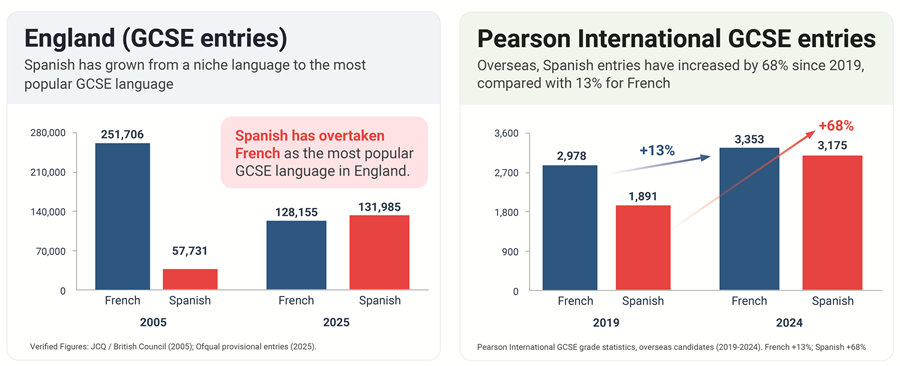
Spanish has moved from a niche language to the most popular GCSE language in England, while Pearson International GCSE entries show a similar shift overseas.
This isn’t about replacing French or other established languages.
It’s about recognising that the balance of language choice is changing.
2Today’s provision doesn’t always reflect tomorrow’s demand
School language provision is built over many years. Departments, specialist teachers, timetables and curriculum resources naturally reflect the languages a school has traditionally offered.
But pupil interests and future opportunities can evolve more quickly than existing provision can adapt.
Language demand can change faster than schools can expand their teaching capacity.
For forward-thinking schools, the question is therefore not necessarily which existing language should be replaced, but whether pupils could benefit from greater choice.
3Broadening language choice can be difficult
Introducing a new language conventionally requires more than pupil interest. Schools need suitably experienced teachers, curriculum resources, timetable capacity and enough demand to justify establishing the provision.
For international schools, specialist recruitment can add another challenge. Research by COBIS and ISC Research has consistently found that a large majority of British international-school leaders experience difficulty recruiting teachers of the quality they require.
But introducing Spanish no longer has to begin with recruiting a Spanish teacher.


4A different way to offer Spanish
Vamos for Schools enables schools to introduce or expand Spanish without first having to recruit additional specialist teaching staff or establish their own Spanish department.
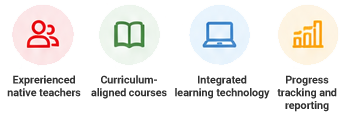
We provide the experienced Spanish teachers, curriculum-aligned programmes, learning resources and integrated technology needed to deliver structured Spanish education within an existing school environment.
This gives schools the flexibility to respond to changing demand while complementing — rather than replacing — their existing language provision.
Give pupils the opportunity before the infrastructure exists.
The languages young people choose today can shape where they study, work and live tomorrow. Schools shouldn’t necessarily have to wait for traditional teaching capacity to catch up before broadening those opportunities.
