You must think this date commemorates separation from Spain, but actually it commemorates the day Uruguay separated from Brazil and became its own country. However, this doesn’t mean they didn’t have to rebel against Spain. They had a very long and complicated independence process.
Let’s go back to the beginning: Uruguay is not a country rich in natural resources, but the Spanish and Portuguese empires were fighting for control and dominance in the region, so they wanted to seize it. Spain won and established a colony there until the people rebelled and declared independence from Spain in 1811.
However, right after this the territory was annexed to Brazil under the control of the Portuguese, but even after Portugal officially left (leaving an heir behind, who then declared independence and became the first emperor of Brazil), the Brazilian empire remained and controlled Uruguay.
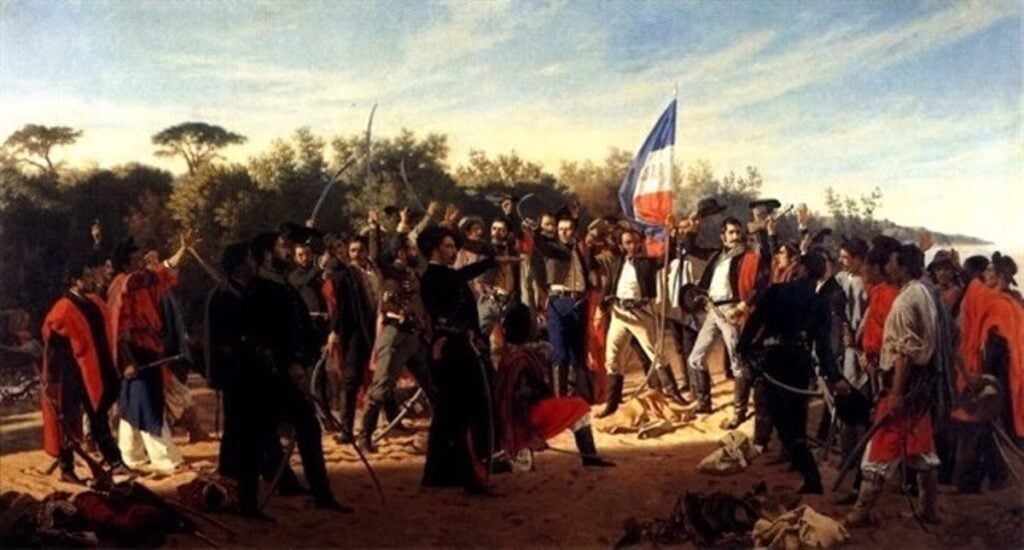
In 1825, Uruguay moved against the empire to become its own nation and after 3 years, a treaty was signed, and they became the country we know today. Fun fact: this treated was brokered by a British diplomat.
Of course, not everything was peace and happiness right off the gate for Uruguayans. There was unrest and conflict, a constitution that did not protect the native population and the rise of a dictator a century later.
After years of internal turmoil, democracy returned in 1984 when the people of Uruguay finally elected Colorado Party leader Julio María Sanguinetti.
This is why his life, and the commemoration of his passing is celebrated in these countries, particularly in Argentina where it’s a public holiday.
Have fun learning!