It’s September, the month of many celebrations in Latin America. Today for instance, we celebrate the independence of Central American countries: Guatemala, Honduras, El Salvador, Nicaragua and Costa Rica.
How did this happen? How did they all separate at once? Well, as you know by now, the combination of the American and French Revolutions, the control of Peninsular Spaniards over Central America, and Spain’s role in the Peninsular War set the stage for the independence movements.
The removal of Ferdinand VII from the Spanish throne inspired revolts in El Salvador and Nicaragua as they wanted to get more autonomy. These were quickly extinguished, but they were vital in later developments. The Guatemalans elected representatives for the Cortes of Cádiz and elected provincial governing councils.
This was all undone by Ferdinan when he came back to power, but the people of the Americas did not take it well. They restored their constitution on 1820 and returned the councils to their positions, which then became the focal point of the separatist movement.
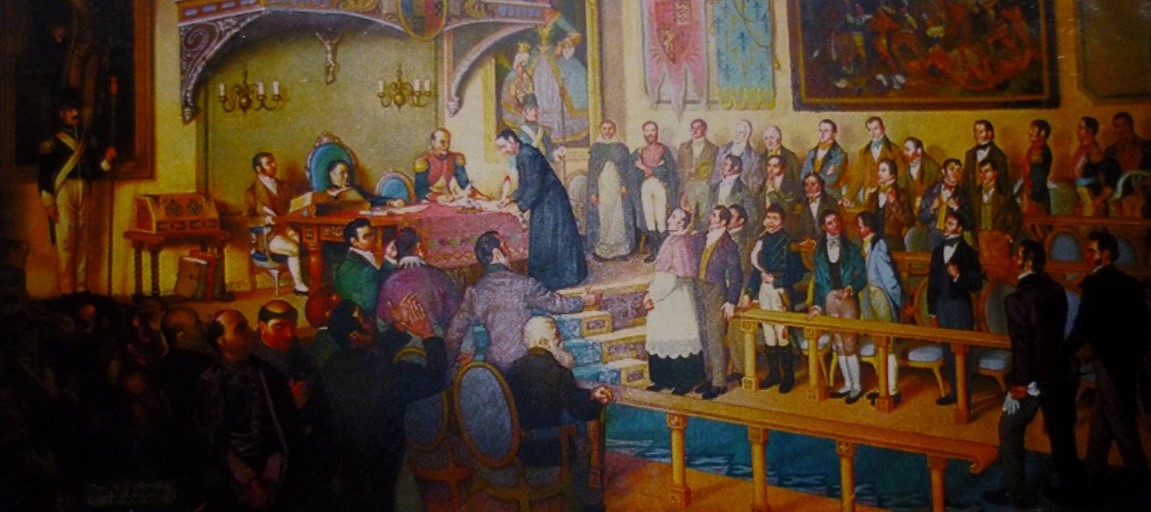
In 1821 the provincial council of Guatemala began to openly discuss a declaration of independence from Spain. By September, most of the local councils had signed and on September 21st, Guatemala sent the declaration of formal independence of the Central American states.
This was not the end of their conflicts, as issues arose and interests collided in the region, but at last, that was no longer Spain’s problem or domain.
Have fun learning!